Finite Element Analysis · Heat Conduction · MATLAB / ABAQUS
Finite Element Heat Conduction Analysis of a Turbine Blade
A finite element analysis project solving a two-dimensional heat conduction problem in one-eighth of a turbine blade using Galerkin’s method, linear triangular elements, MATLAB implementation, and ABAQUS validation.
Project Overview
This project analyzed heat conduction in a turbine blade section by taking advantage of symmetry and modeling one-eighth of the blade. The work derived the strong form, weak form, and finite element discretization of the heat conduction problem, then implemented the numerical solver in MATLAB using linear triangular elements.
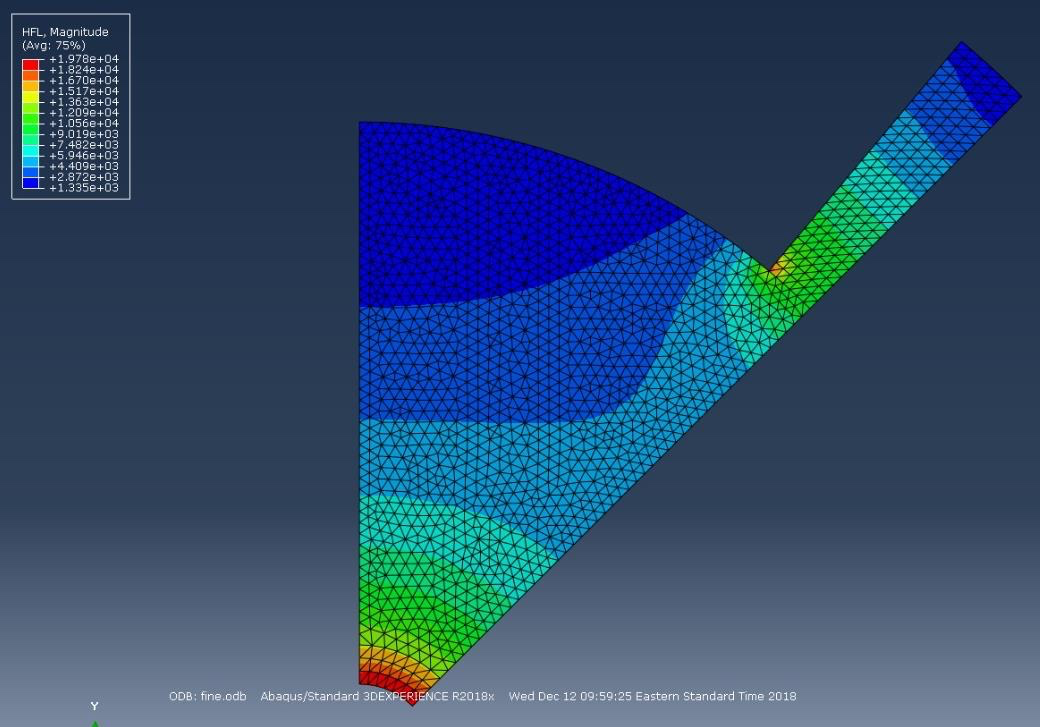
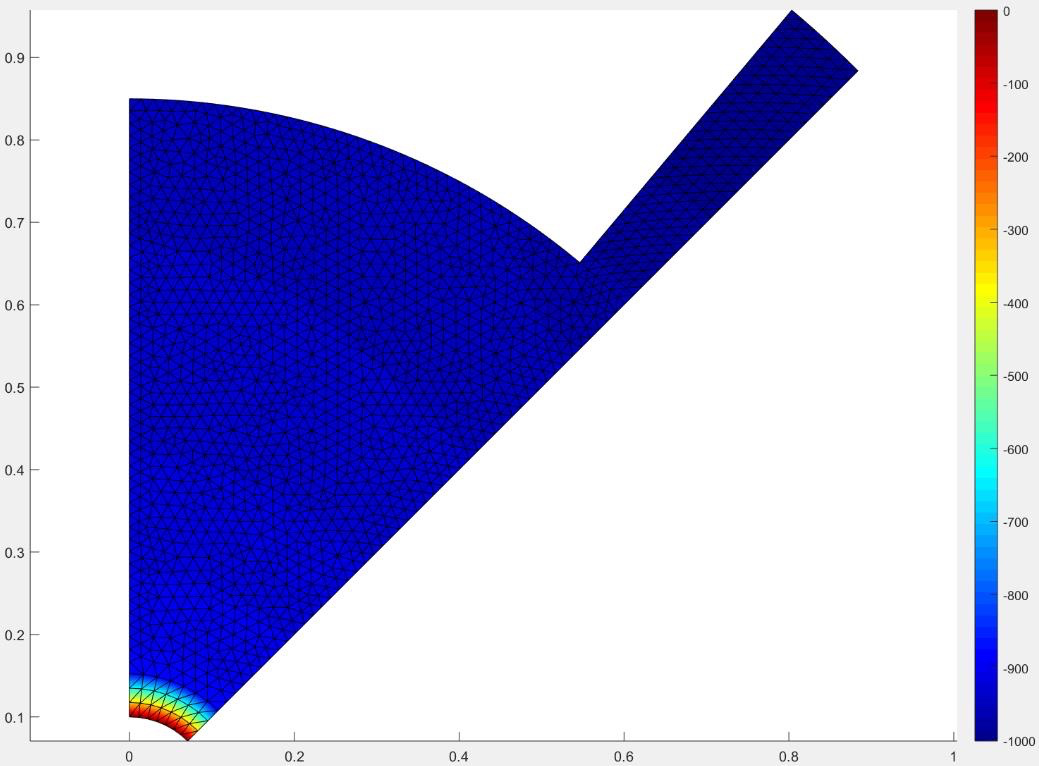
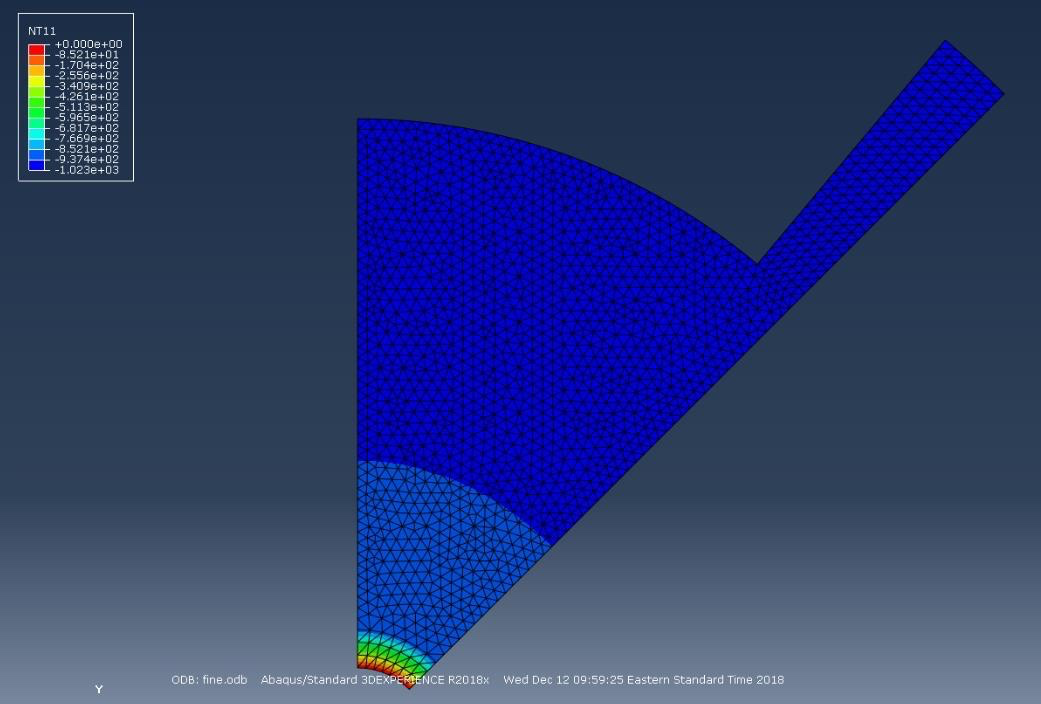
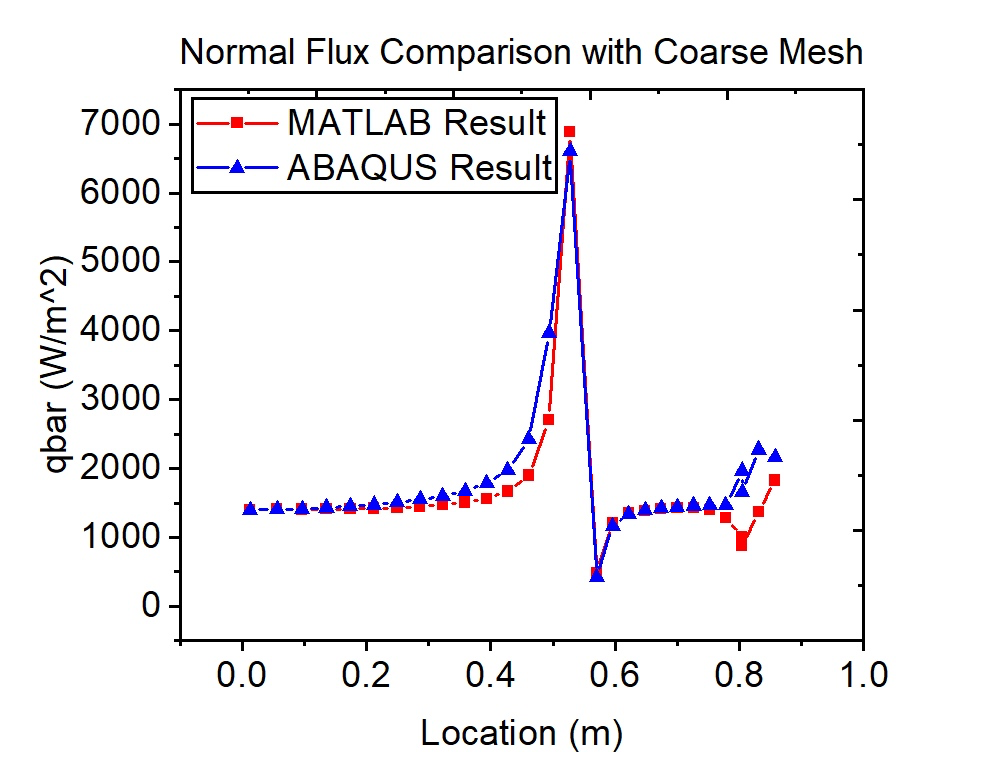
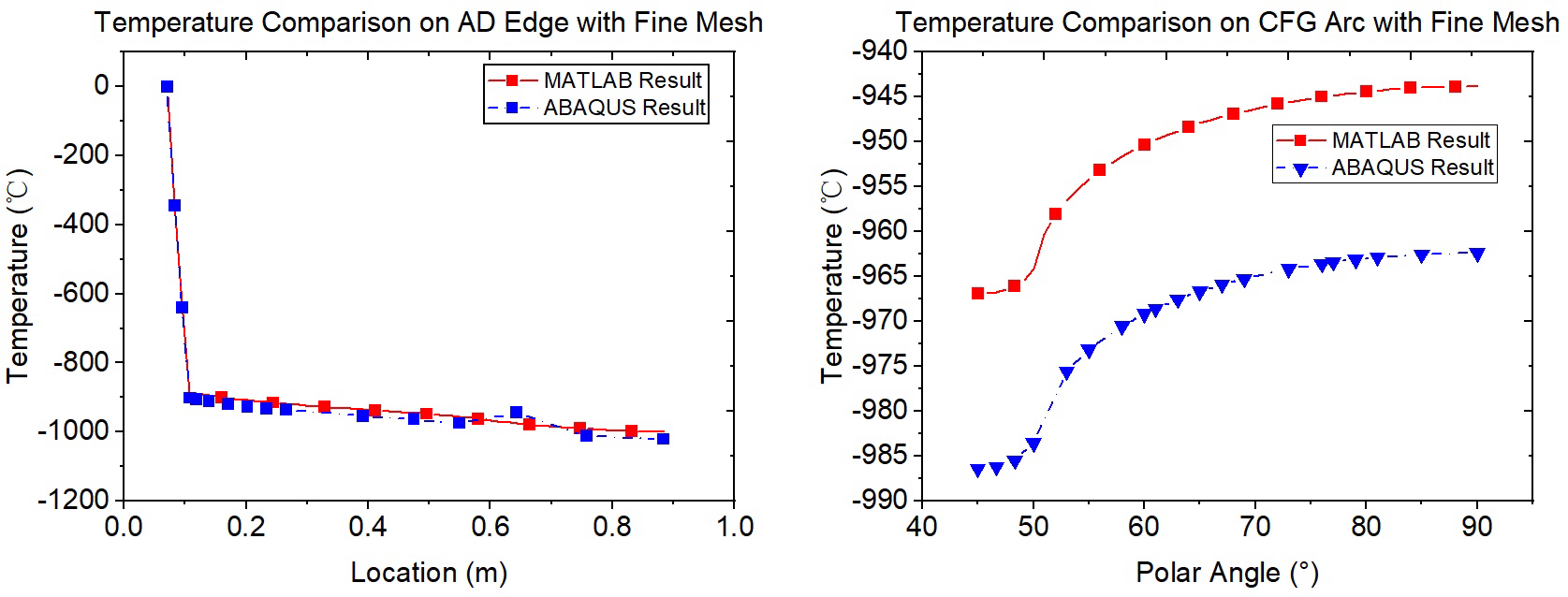
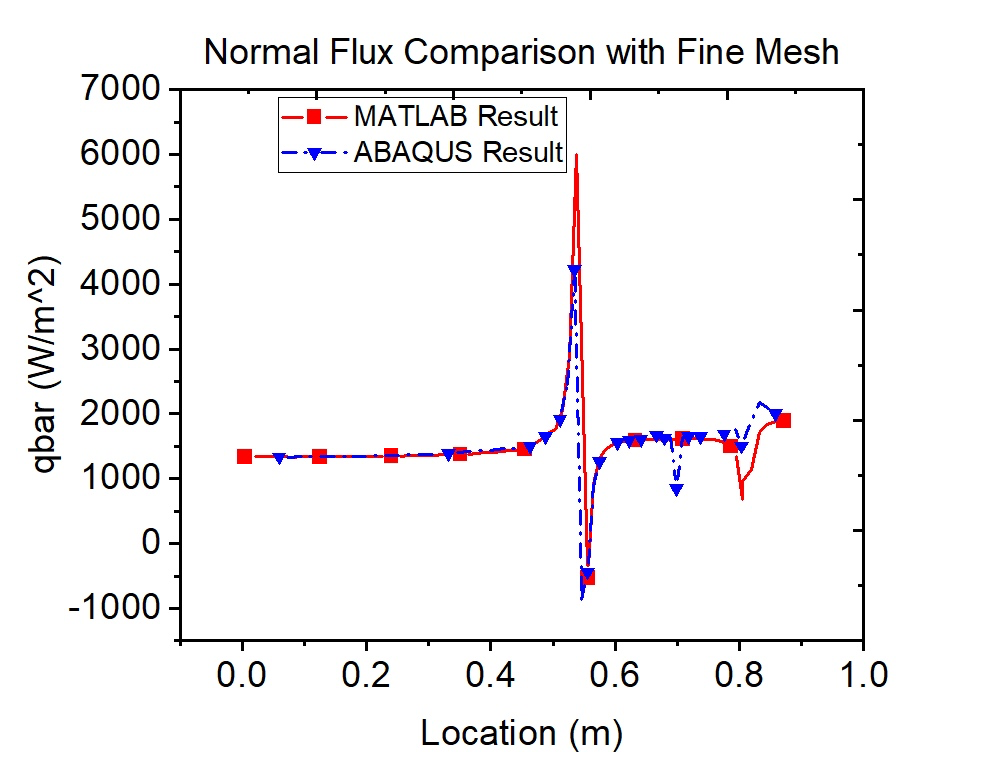
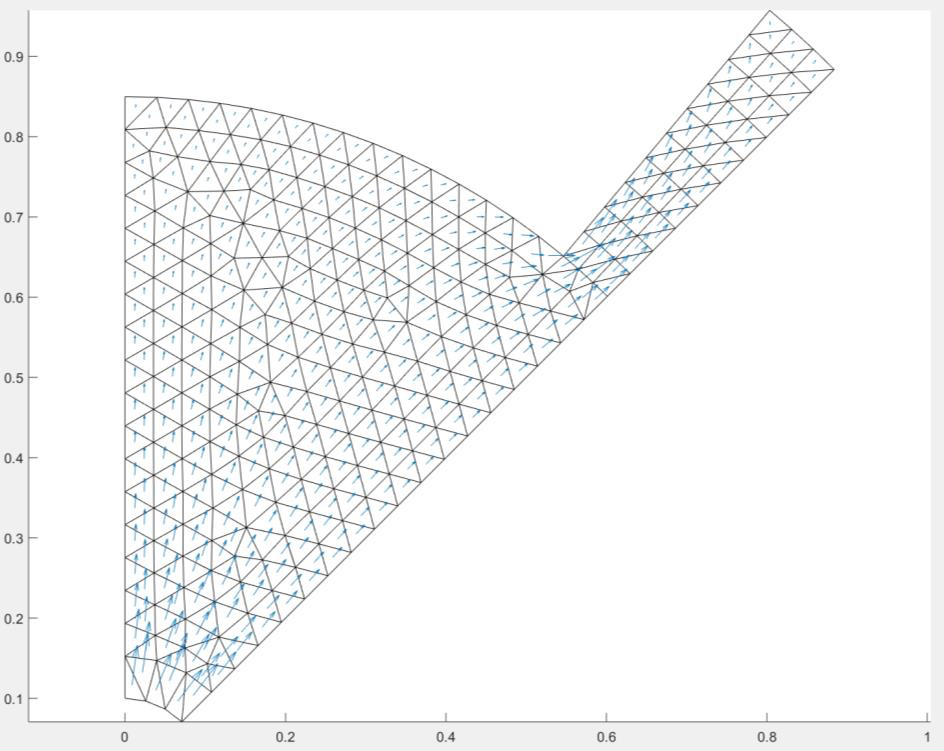
The MATLAB results were compared against ABAQUS simulations under coarse and fine meshes. The comparison included temperature contours, normal heat flux, flux vector fields, and boundary-condition validation. The results show that the MATLAB implementation agrees well with ABAQUS, supporting the accuracy and feasibility of the Galerkin FEM solver.
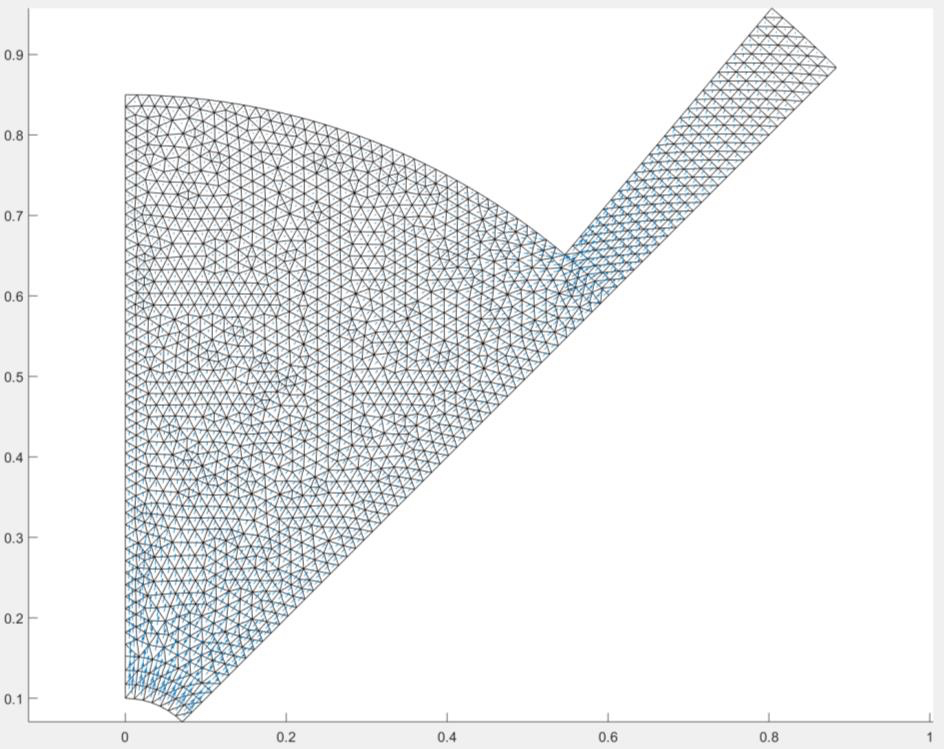
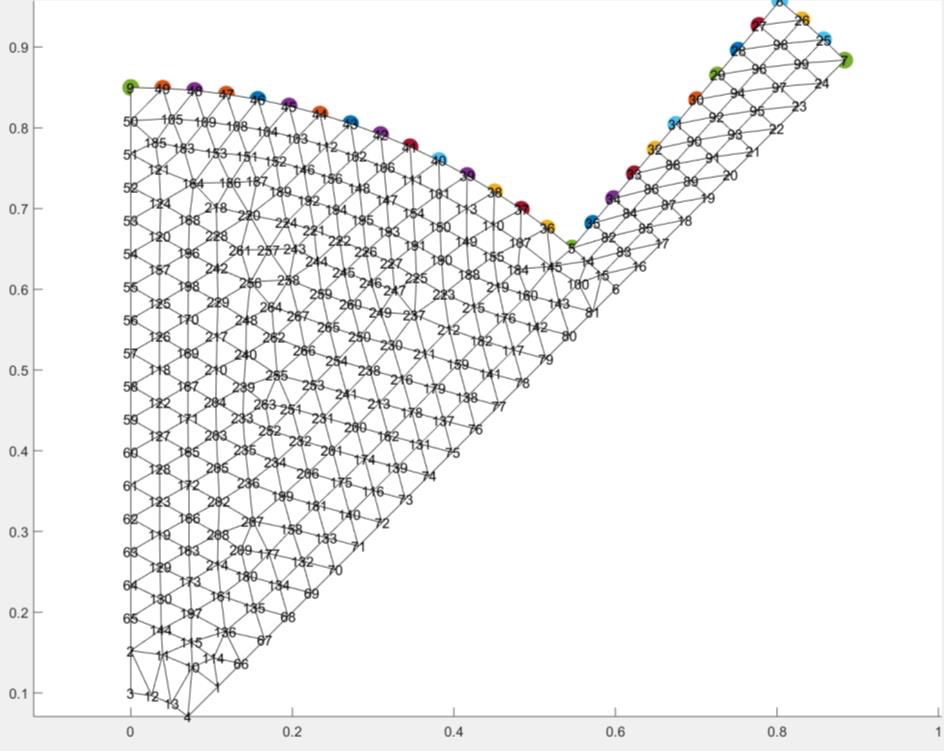
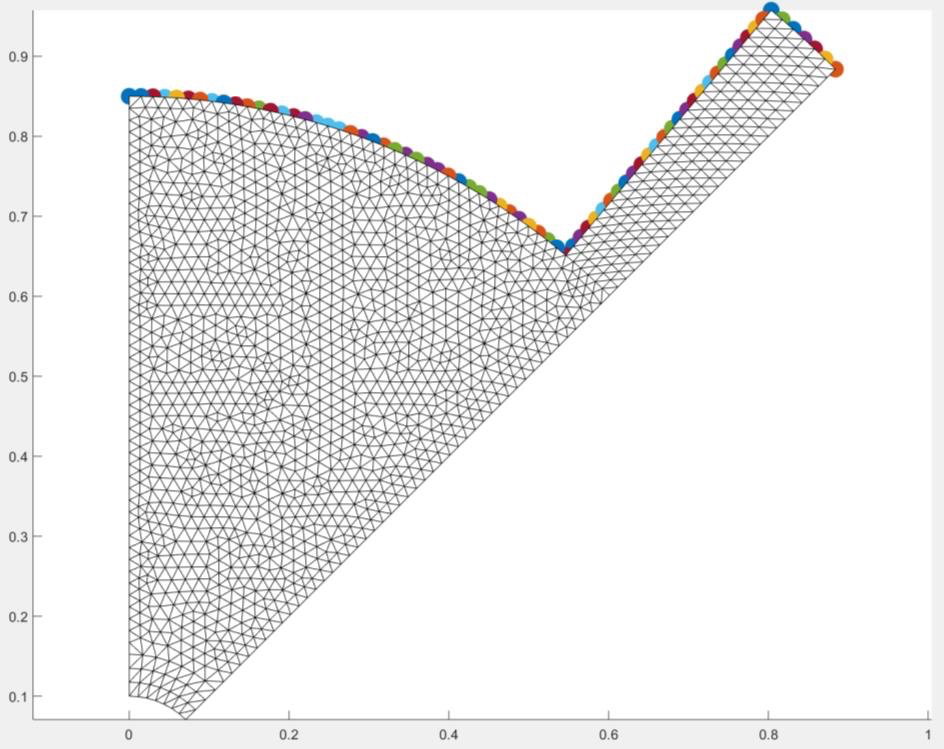
Coarse triangular mesh with 455 elements generated from ABAQUS.
Fine triangular mesh with 2287 elements for convergence comparison.
Used three-node triangular elements with linear shape functions.
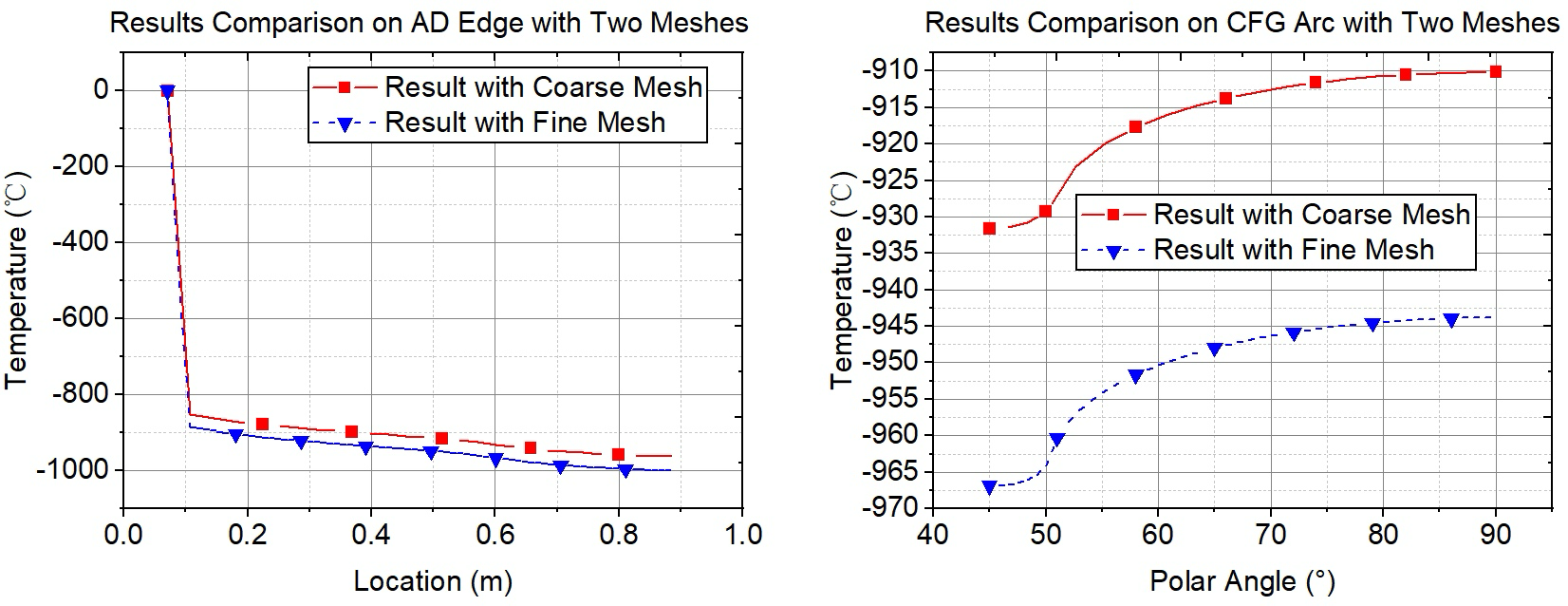
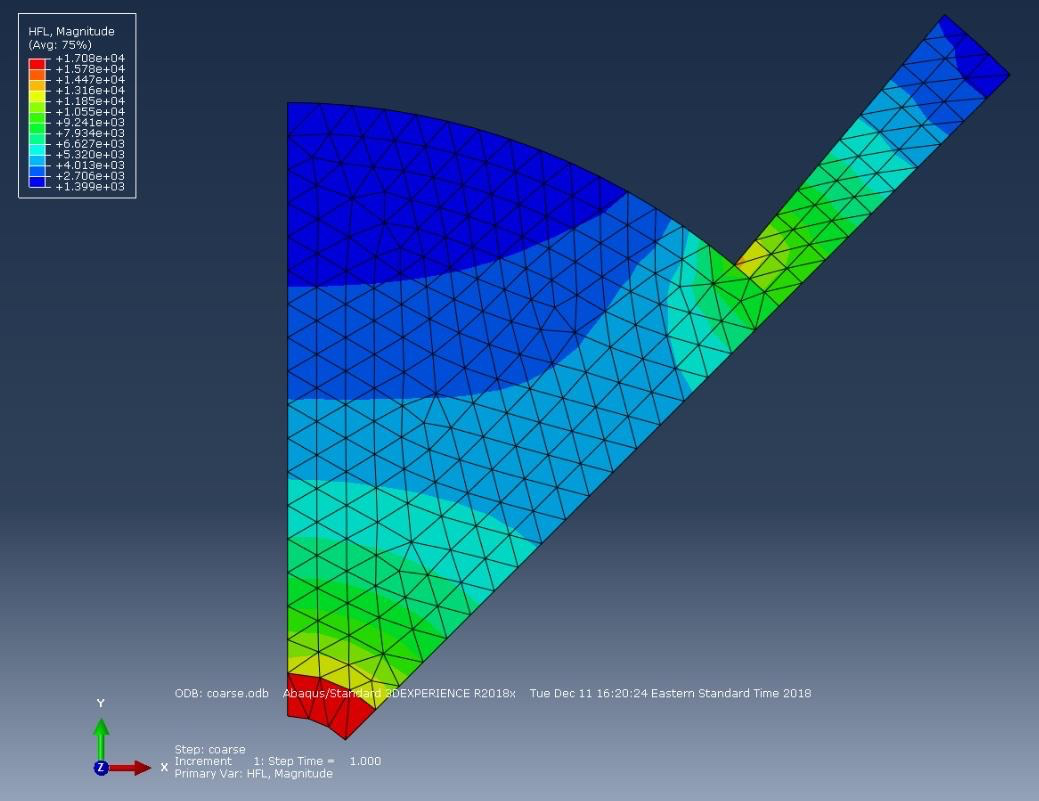
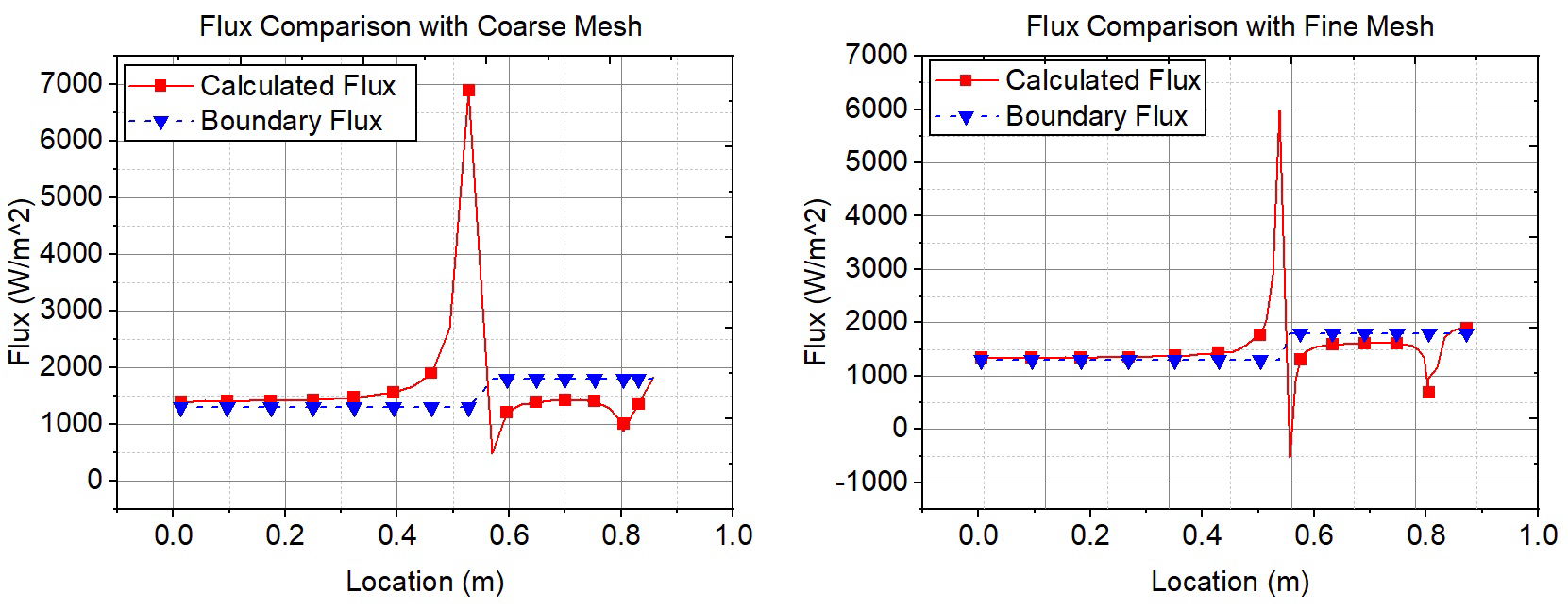
Compared temperature and normal flux results across meshes.
My Role
- Derived the strong and weak forms for the heat conduction problem.
- Implemented Galerkin finite element formulation using linear triangular elements.
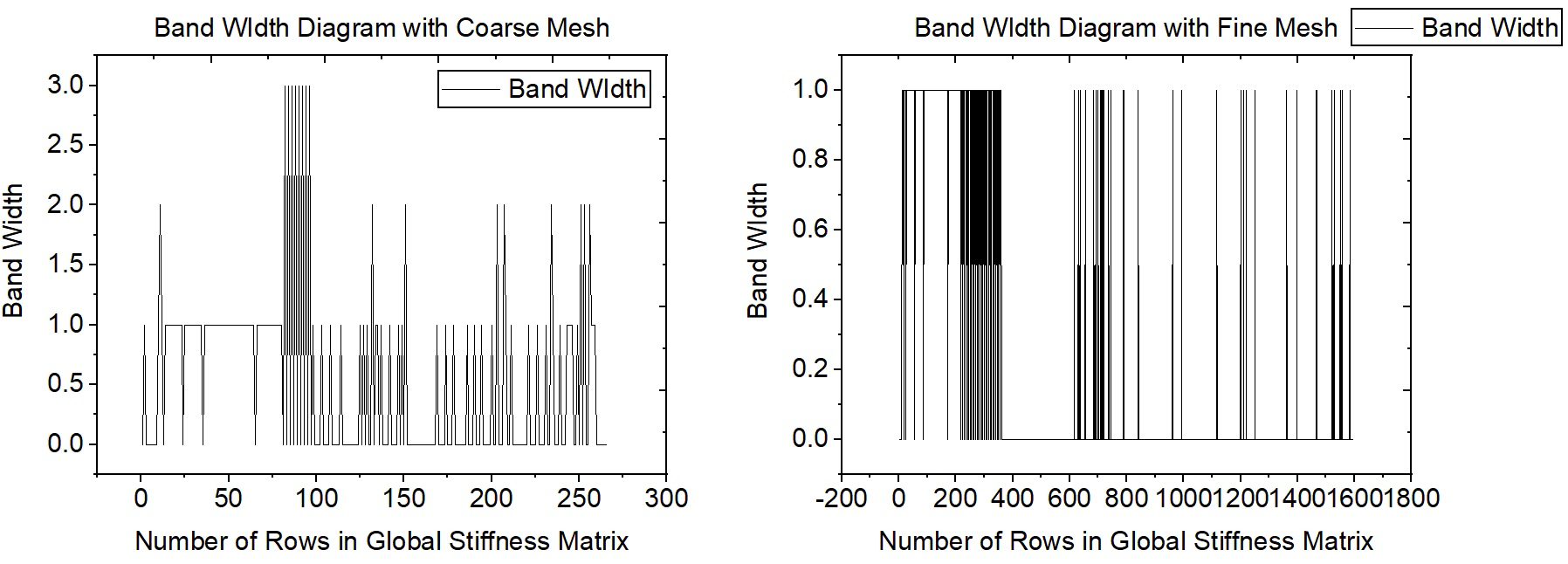
- Assembled the global stiffness matrix and force vector in MATLAB.
- Computed temperature fields and heat flux vector fields for coarse and fine meshes.
- Compared MATLAB numerical results with ABAQUS FEM simulations.
- Analyzed mesh refinement, boundary-condition accuracy, and flux singularities near sharp geometry points.
Mesh Design
The turbine blade geometry was discretized using linear triangular elements. Both coarse and fine meshes were used to study convergence behavior and compare the sensitivity of temperature and flux fields to mesh density.
Temperature & Flux Results
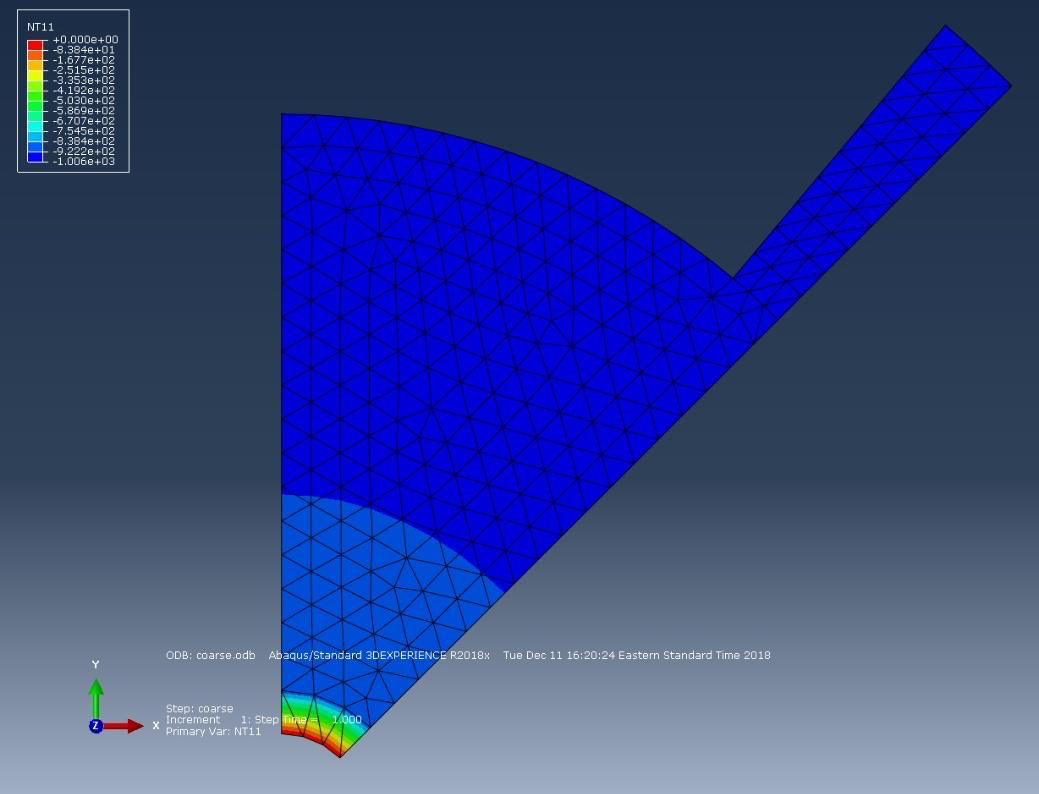
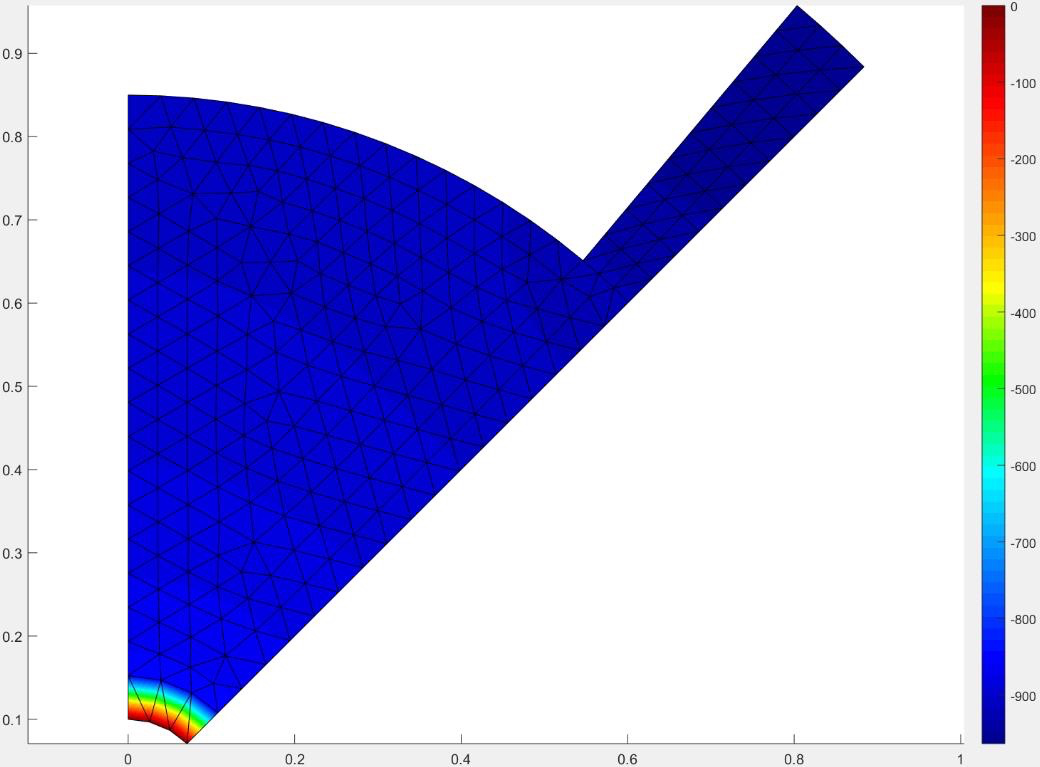
The temperature contours from coarse and fine meshes show similar thermal patterns, indicating convergence of the numerical solution. The normal flux results match the boundary condition trend well overall, while sharp geometry points create local singular behavior.
MATLAB / ABAQUS Validation
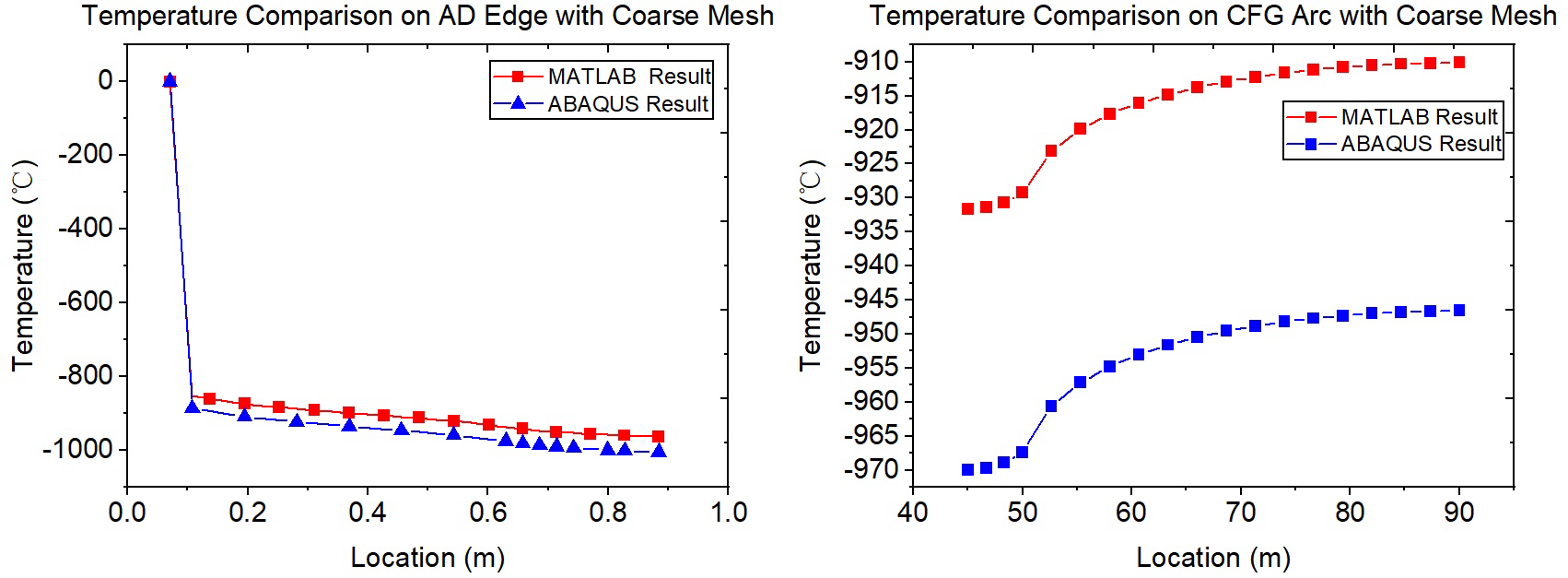
To verify the MATLAB implementation, the same heat conduction problem was solved in ABAQUS. The temperature and heat flux contours from ABAQUS were compared with the custom MATLAB FEM results under both coarse and fine mesh settings.
Fine Mesh Validation
Fine mesh validation was used to further compare the MATLAB Galerkin FEM solver against ABAQUS. The fine mesh results provide a clearer view of convergence and improve the spatial resolution of both temperature and heat flux fields.
Algorithm Design
The MATLAB solver was organized into pre-processing, analysis, and post-processing steps. The workflow included loading mesh connectivity and node locations, computing local stiffness matrices and force vectors, applying boundary conditions, assembling the global system, and solving for temperature and flux fields.
Project Gallery
Mesh diagrams, temperature contours, flux fields, and MATLAB / ABAQUS validation results.