Fracture Mechanics · XFEM · Inverse Problem
Fracture Mechanics FEM & XFEM-Based Crack Identification
A finite element analysis project focused on crack and flaw identification in heterogeneous materials using inverse problem formulation, genetic algorithm optimization, and XFEM-based crack modeling.
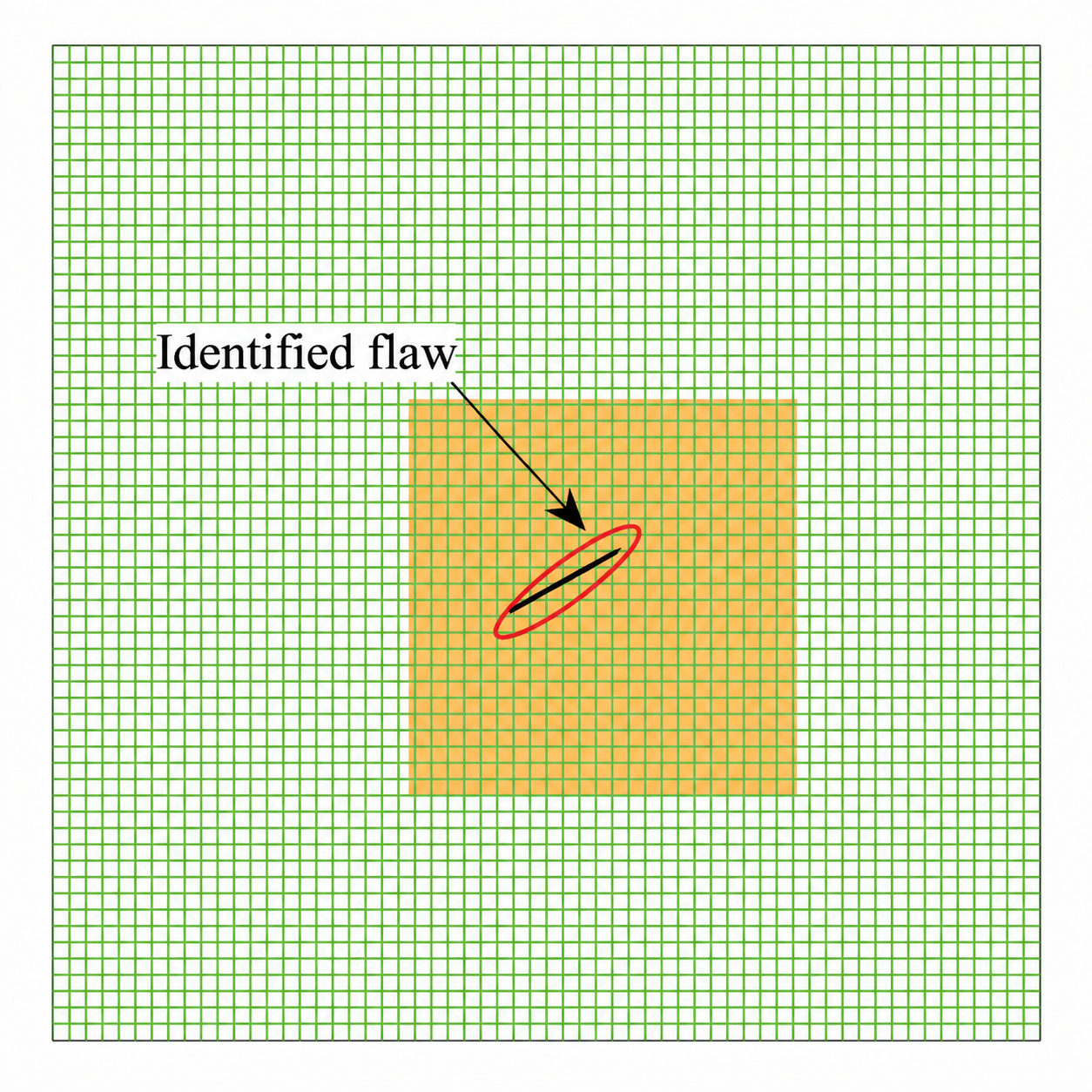
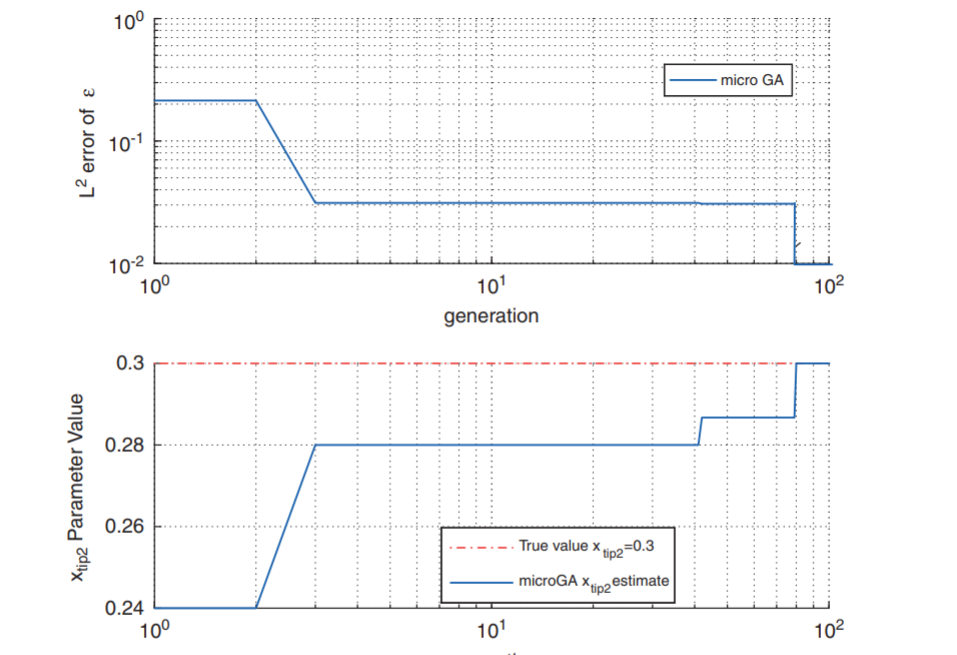
Project Overview
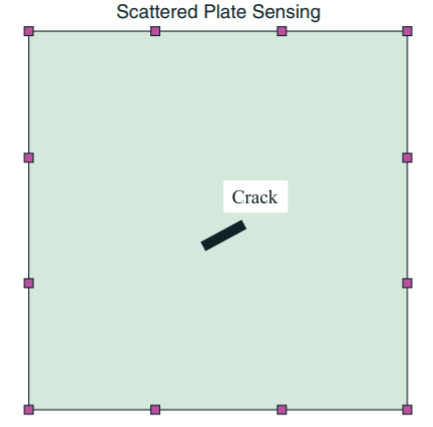
This project studied crack and flaw identification in finite element models of heterogeneous materials. The work combined forward elasticity analysis, inverse problem formulation, genetic algorithm optimization, and XFEM-based crack modeling to estimate crack or hole parameters from structural response data.
The project considered voided microstructures, isotropic damage modeling, crack-mesh intersection representation, XFEM enrichment, and numerical examples for crack detection. The goal was to connect fracture mechanics theory with computational implementation and optimization-based flaw identification.
Used an isotropic damage model for voided heterogeneous microstructures.
Applied genetic algorithm search for inverse crack or flaw identification.
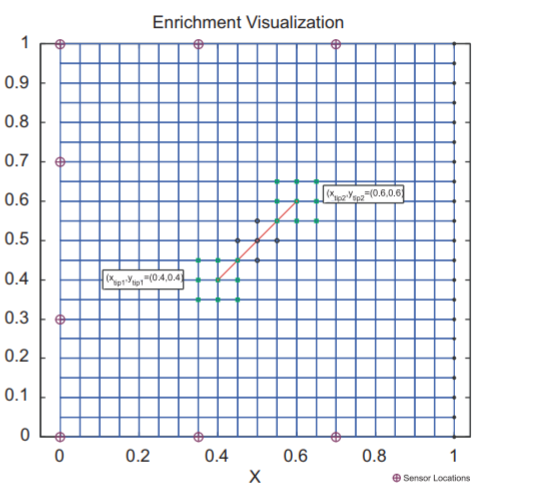
Used enrichment functions to model cracks without conforming the mesh to the crack.
Framed crack identification as a non-destructive detection problem.
My Role
- Reviewed fracture mechanics and computational homogenization concepts.
- Formulated forward and inverse elasticity problems for crack and hole identification.
- Studied genetic algorithm optimization for global search of flaw parameters.
- Built the conceptual XFEM workflow for crack-mesh intersection and enrichment.
- Analyzed numerical examples involving cracked domains and convergence behavior.
- Prepared visual explanations of microstructures, crack databases, and XFEM-GA workflows.
Microstructure & Damage Modeling
The project began with voided microstructures representing heterogeneous material behavior. A simple isotropic damage model was used to describe material degradation, with damage governed by an exponential evolution law.
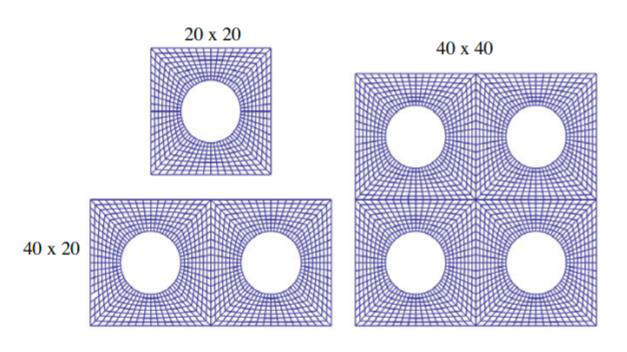
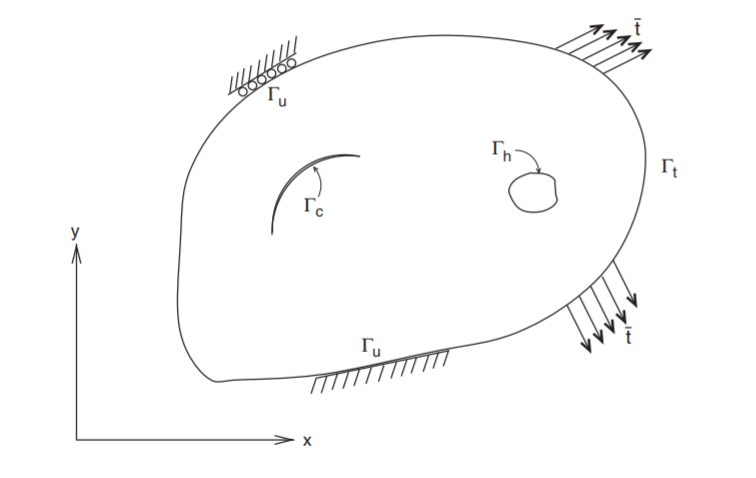
GA-Based Inverse Identification
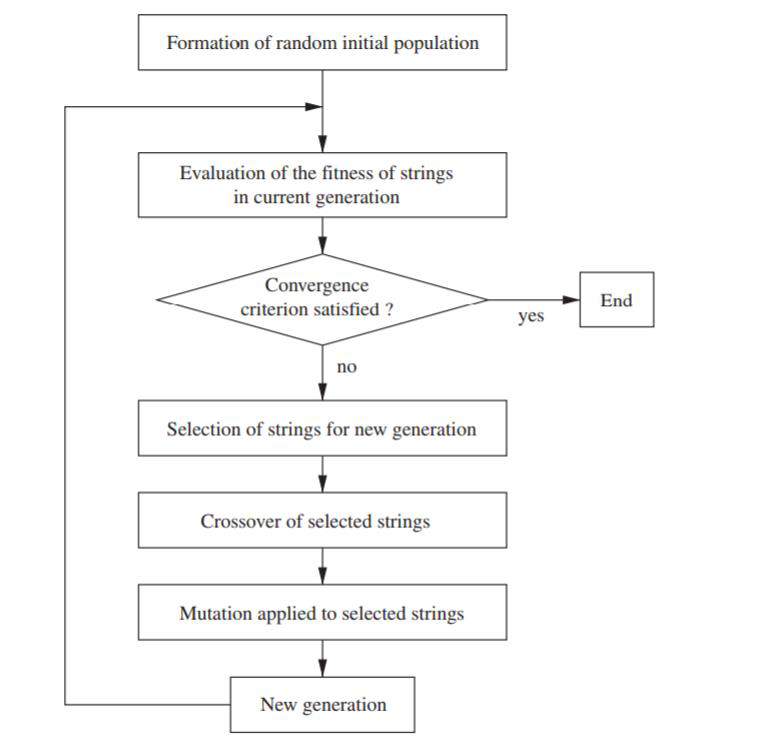
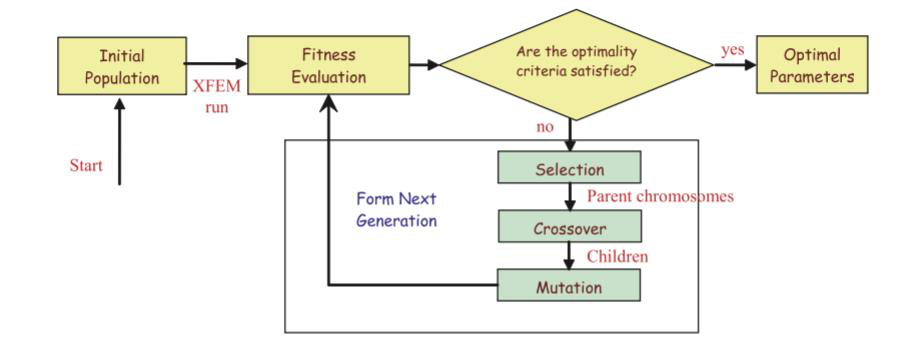
The inverse problem was formulated as an optimization problem, where candidate crack or hole parameters were updated to minimize the difference between measured and simulated response data. A genetic algorithm was used because it is suitable for global search and does not require an explicitly differentiable objective function.
XFEM Crack Modeling
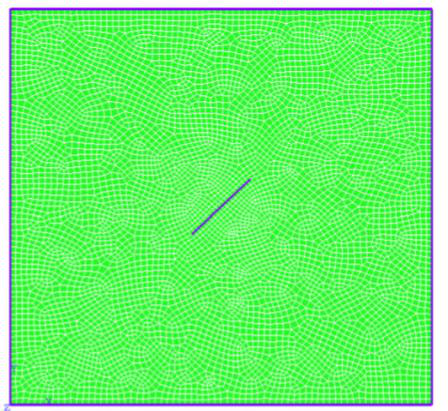
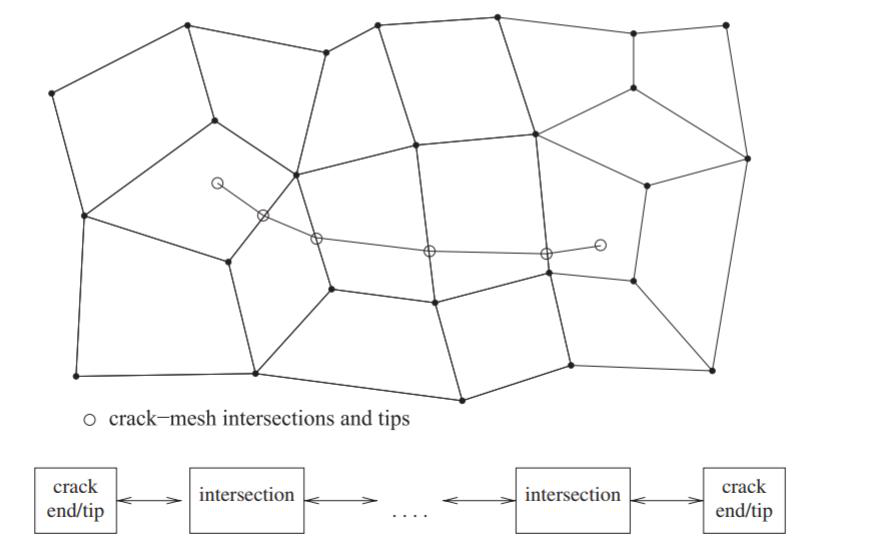
The XFEM-based scheme was used to represent cracks without forcing the finite element mesh to conform to the crack geometry. Crack information was represented through crack tips, crack-mesh intersections, and a linked-list structure used during the enrichment process.
Project Gallery
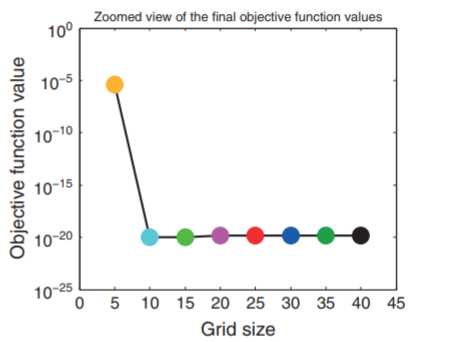
Microstructure models, XFEM workflows, crack detection, and convergence results.