Finite Element Modeling · Experimental Testing
Uniaxial Tension Test & ABAQUS FEM Prediction
A combined experimental and numerical project comparing the tensile behavior of 3D-printed PLA specimens with ABAQUS finite element predictions under coarse and refined mesh conditions.
Project Overview
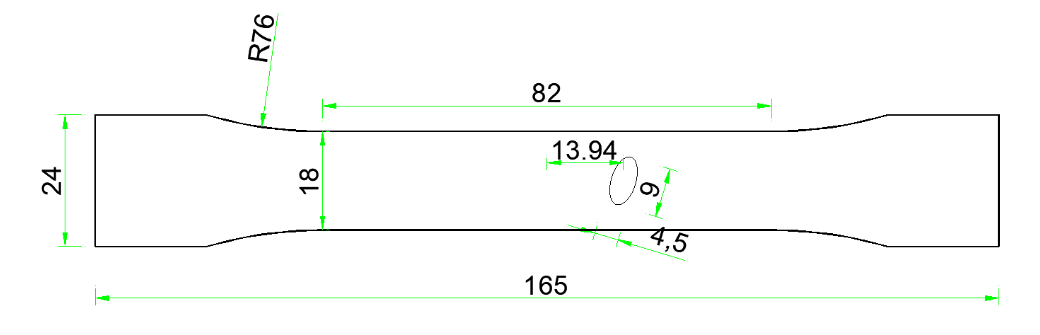
This project studied the mechanical response of 3D-printed PLA specimens through a uniaxial tension experiment and ABAQUS finite element simulation. The work first estimated the material Young’s modulus from experimental stress-strain data, then modeled a specimen with an elliptical hole to study stress concentration and load-displacement behavior.
The ABAQUS model was evaluated using both coarse and refined meshes. The numerical results were compared with experimental measurements to assess the accuracy of the FEM prediction and identify possible sources of error, including material nonlinearity, printing-induced anisotropy, and simplified boundary conditions.
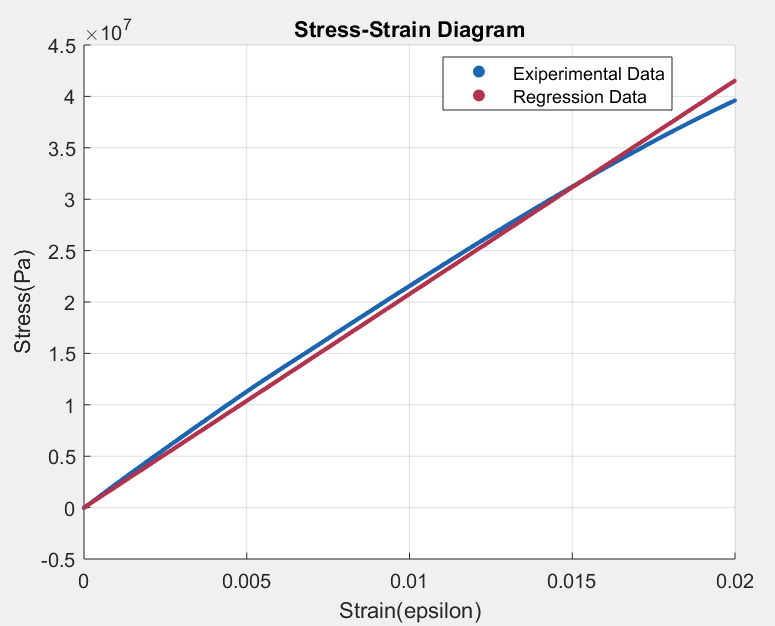
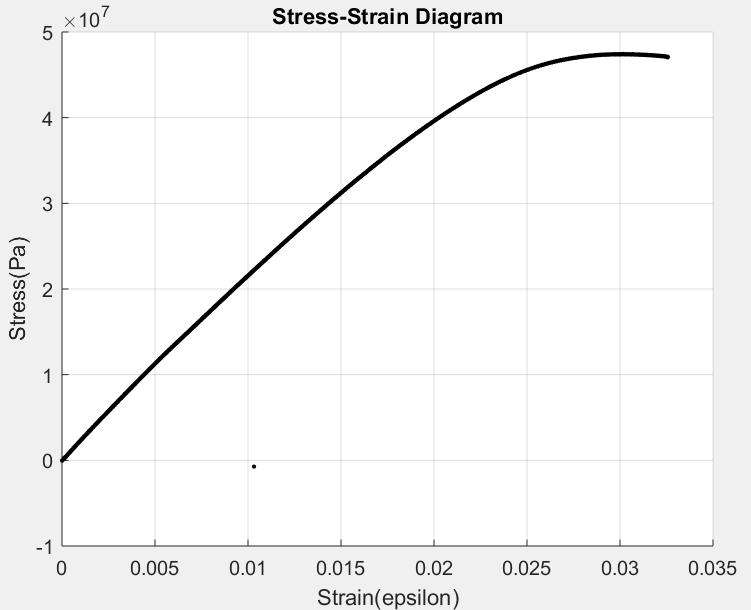
Estimated from linear regression of experimental stress-strain data.
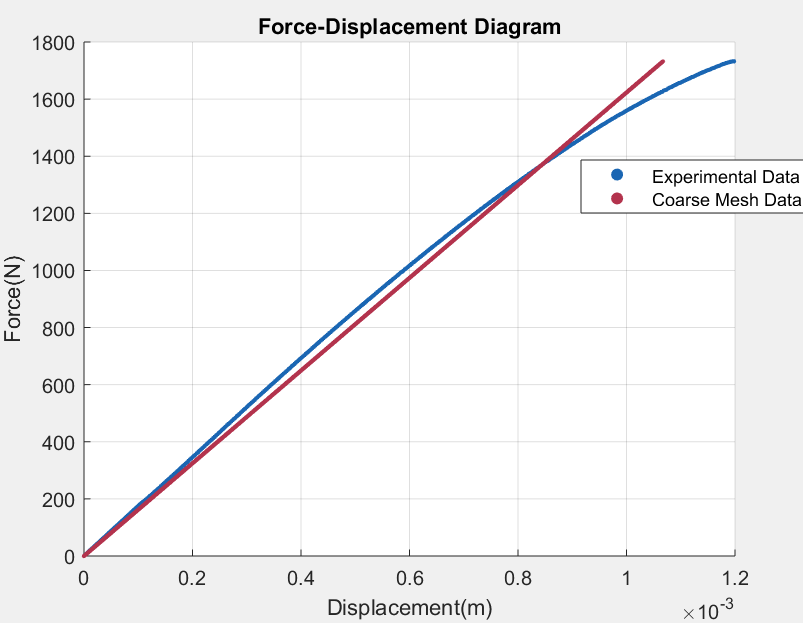
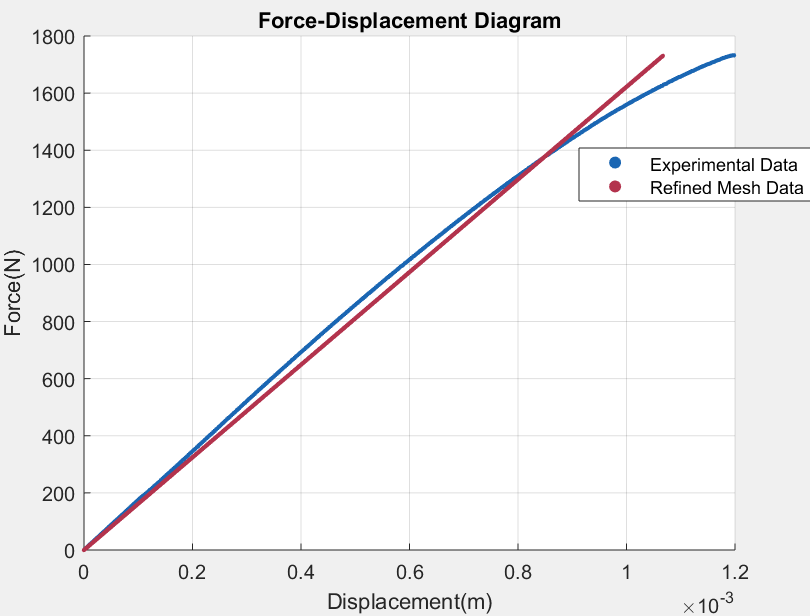
Measured from the refined force-displacement response.
Maximum displacement predicted by the coarse ABAQUS model.
Maximum displacement predicted by the refined ABAQUS model.
My Role
- Processed experimental stress-strain data and estimated Young’s modulus.
- Built ABAQUS finite element models for a PLA specimen with an elliptical hole.
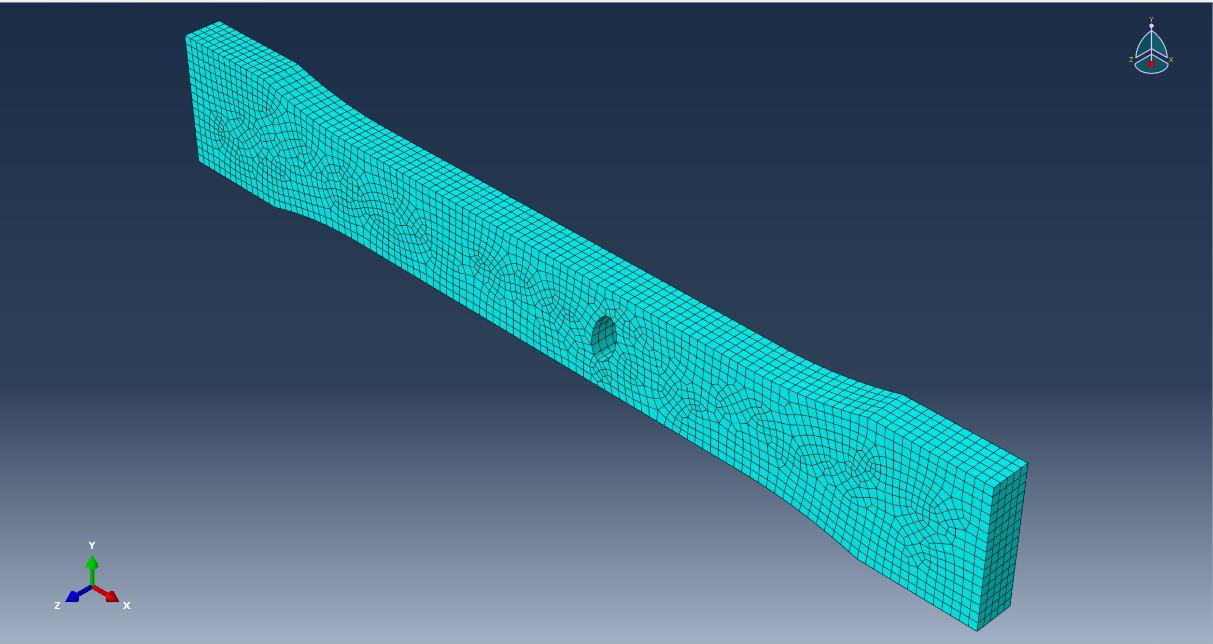
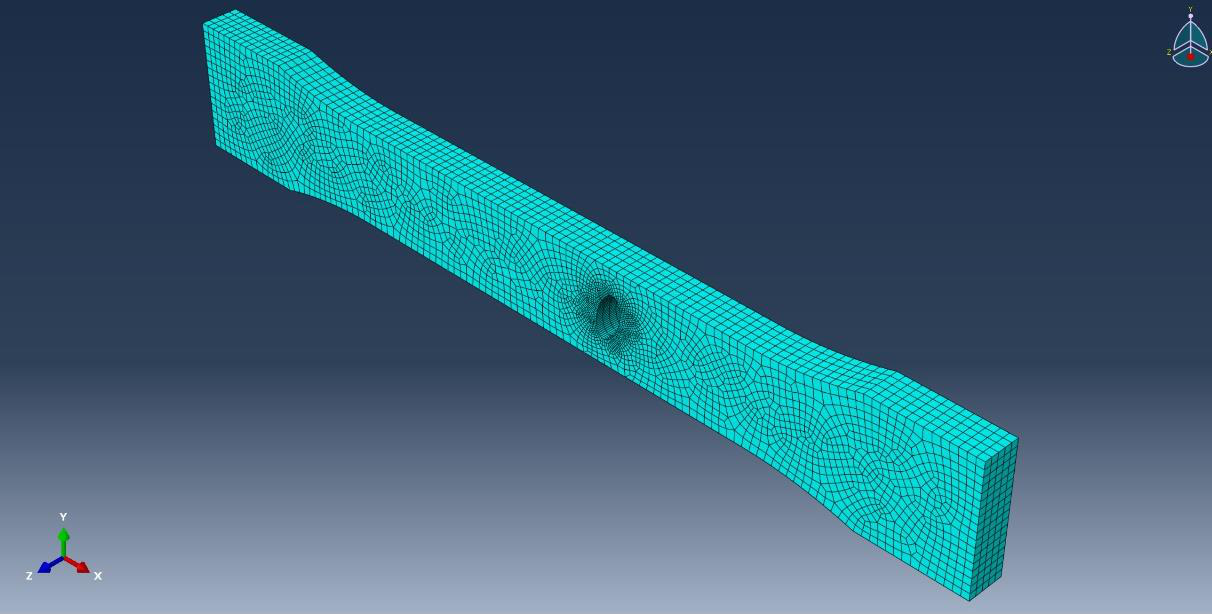
- Compared coarse and refined mesh simulations near stress concentration regions.
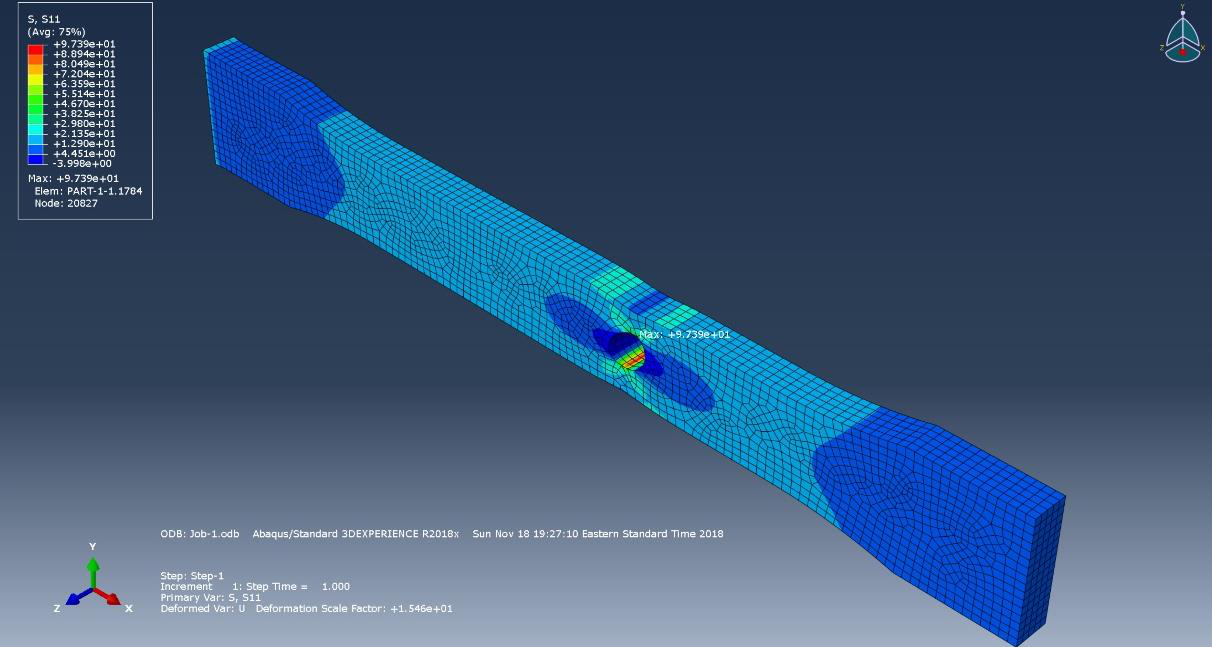
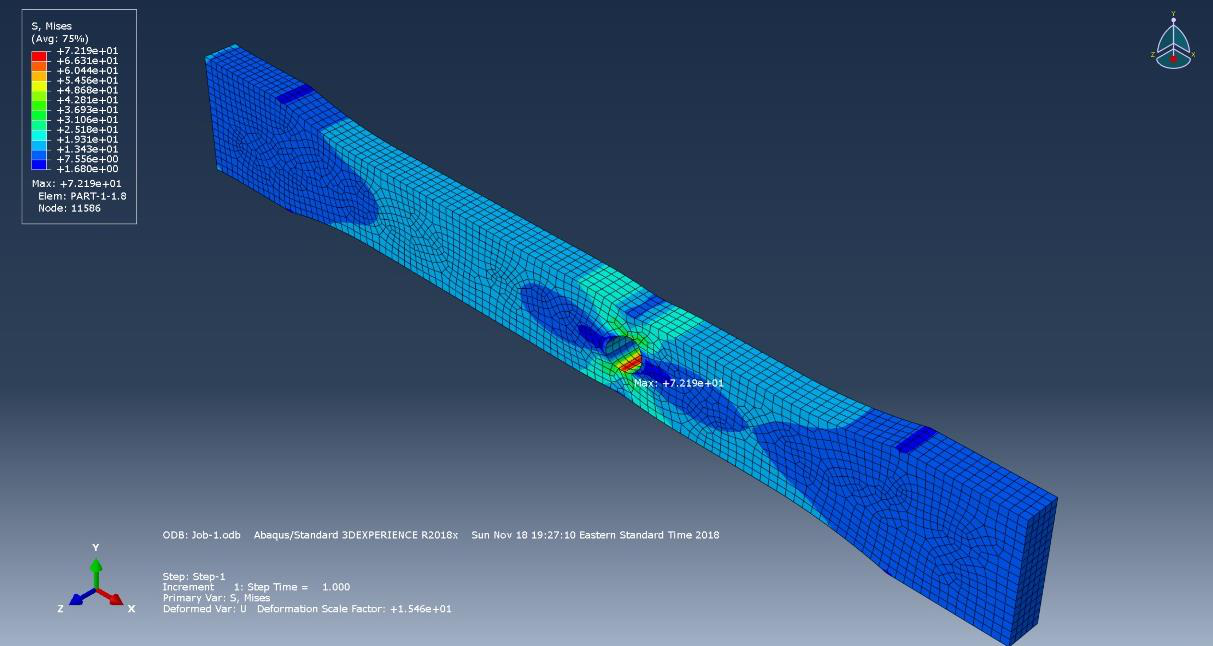
- Generated Von Mises stress, longitudinal stress, and displacement contour plots.
- Compared FEM load-displacement predictions with experimental test data.
- Analyzed modeling errors caused by material nonlinearity and boundary conditions.
Experimental Testing
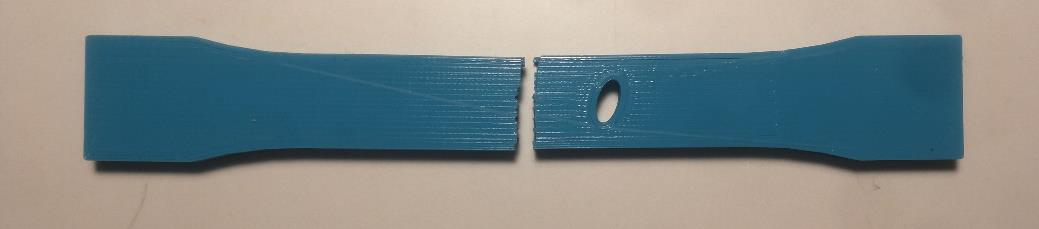
The experiment used 3D-printed PLA specimens. The stress-strain curve was used to estimate Young’s modulus through linear regression in the initial elastic range. The specimen with an elliptical hole was then tested to obtain its force-displacement relationship and failure behavior.
ABAQUS Modeling
The numerical analysis used ABAQUS to model the specimen geometry and simulate the tensile response. The model was studied with a coarse mesh and a refined mesh, with refinement near the elliptical hole where stress concentration occurs.
Project Gallery
Experimental curves, specimen geometry, mesh models, and ABAQUS stress contours.